A reef tank does not need the biggest ozone generator. It needs the right size, an ORP controller, and carbon on the outputs. Get those three right, and ozone gives you clearer water, stronger skimming, and healthier corals. Get them wrong, and it becomes a risk to everything in the tank.
1. Size it to the tank, not the catalogue
For most home reef systems, 100–200 mg/hr is the working range. More ozone without control does not mean clearer water — it means risk to corals and fish.
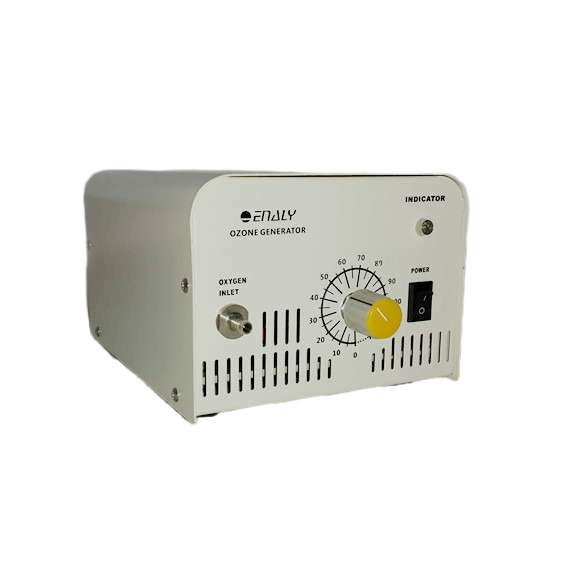
Look for a unit with an adjustable output dial, so you can start low and turn it up only as far as the tank needs. A fixed-output generator forces you to run at full strength even when the tank only needs a fraction of it.
2. An ORP controller is not optional
Ozone should switch on and off automatically against a redox (ORP) reading — not run on a timer, and never run uncontrolled.
Hold ORP at 300–350 mV and never exceed 400 mV. Above that level, ozone stops helping the tank and starts stressing its inhabitants.
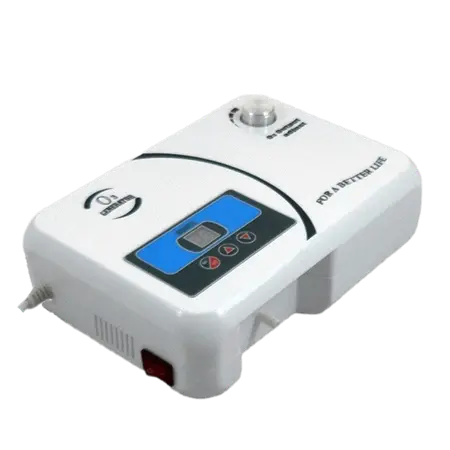
A unit with a built-in controller covers this in one box. The ENALY OZAC-Plus 200 (200 mg/hr, adjustable 10–100%, built-in ORP controller with digital readout) is built for exactly this setup; the ORP probe is bought separately. If you buy a generator without a controller, budget for a separate ORP controller — running ozone without one is not worth the risk.
3. Plumb it through the skimmer
Connect the generator’s output to the protein skimmer’s air intake. The skimmer is the right place for ozone: it mixes the gas thoroughly with the water and gives the contact time ozone needs to work.
Four setup rules:
- Keep the unit above the waterline, so water can never siphon back into it.
- Fit a check valve in the air line as a second line of defence.
- Run carbon on both the air output and the water output, to catch any residual ozone before it reaches the room or the tank.
- Do the smell test: if you can smell ozone in the room, change the carbon. That smell means residual ozone is escaping.
4. What you should see
Within days: clearer water and better light penetration, as ozone breaks down the yellowing compounds that build up in a reef system.
Within weeks: stronger skimmer performance, as waste particles clump together and are pulled out more effectively, and healthier polyp extension as coral defensive toxins break down.
What ozone will not do: it does not replace water changes, mechanical filtration, or good husbandry. Think of it as a water-clarity and redox tool, not a substitute for maintenance.
5. What to look for when buying
- Adjustable output — a dial, not a fixed setting.
- ORP control — built in, or a separate controller in the budget.
- An air dryer — dry air keeps output steady and extends the life of the ozone tube. The OZAC-Plus 200 ships with an external air dryer included.
- The right size for your tank — 100–200 mg/hr covers most home reef systems; bigger is not better.
- A compact, quiet unit — it will live next to the tank, often in a living room.
A note on safety
Ozone is a strong oxidant. Run the generator in a ventilated space, never breathe concentrated ozone directly, keep carbon on the outputs, and never let ORP exceed 400 mV. Used as directed, ozone breaks down back into oxygen and leaves no chemical residue in the water.
Bottom line
The best ozone generator for a reef tank is the one that matches your tank’s size, holds ORP steady on its own, and plumbs cleanly through your skimmer. Size, control, and carbon — in that order.
The ENALY OZAC-Plus 200 is our aquarium unit for reef systems: 200 mg/hr, adjustable 10–100%, built-in ORP controller with digital readout, external air dryer included (ORP probe sold separately), 12 W, DC 12 V. See the OZAC-Plus 200 product page.